Barn & Book

(mis)Adventures in crafting, cooking, and exploration

Cold season, flu season, coronavirus season: it didn’t take a COVID-19 outbreak for me to get the sniffles last week. With temperatures fluctuating between freezing and balmy, a hectic work schedule, and not enough sleep, I came down with a garden-variety cold. Not to worry everyone, it was sneezing and a cough, and I tucked in at home and didn’t go outside for a full week+.

woman holding blue ceramic mug

Photo by Lisa Fotios on Pexels.com

I hate using cold medicine. It always dries me out and messes with my brain; I become a complete zombie. Also, with coronavirus sweeping the east coast, I wanted to closely monitor my temperature to ensure I didn’t have a fever. Tylenol was out. This time around, I only used a single dose sudafed on my worst day (to turn off the faucet that was my nose).

Of course, I’m not a masochist, so I did do a few things to aid my recovery and aleave my symptoms.

My arsenal for cold recovery*:

    1. Melatonin. Each night, I took a melatonin pill to help me get a full night’s rest. When I’m sick, my sleep schedule gets out of whack very quickly. Napping during the day and staying awake all night is a recipe for disaster. By taking melatonin (a naturally occurring hormone that regulates sleep cycles), I had the extra help I needed to fall asleep each night at a normal hour and get the full night’s rest my body needed.
    2. Water. When I’m sick, I drink so much water, I’m practically floating. I drink water with lemon, hot water, ice water, water with Emergen-C, water with a dash of whatever juice I have in the fridge. I just fill up my biggest mason jar (4 pints – thanks Grammie), throw in a straw, and drink water until I grow gills.
    3. Tea with honey, lemon, and freshly grated ginger and garlic. This can’t-live-without-it remedy has its roots in my childhood. My dad is not a cook (he just learned how to make oatmeal last year), but boy, can he make a cup of tea. Just a teabag, a whole lot of pulpy lemon, and more honey than a child should consume. The tart syrupy brew that soothed every ailment is one of my strongest childhood memories. Today, I make something slightly less diabetic (but really – honey is antibacterial – so actually you need it), and a little sharper to the palate. Instead of a tea bag, I grate half an inch of fresh ginger and a clove of garlic directly into a mug of hot water, add the juice of half a lemon, a generous portion of honey, and let it all steep. I’m telling you, this elixir is magic and it really does taste good! If you’re put off by the ginger pulp that settles on the bottom of your mug, you can throw all of that beautiful spicy ginger and garlic into a tea filter bag or tea ball strainer.
    4. Gargle with salt water. This is my least favorite, and its ALSO a remedy brought to you by my dad. I can’t tell you how much I hate gargling with (but really choking on) briny warm water when I’m feeling gross, but, darn it, it works. Anytime I or my sisters complain about a sore throat, its the first thing my Dad asks: “Did you gargle with salt water”? His question is almost always met with a groan and a sigh, and, eventually, a begrudging trip to the sink.

*Hey, I’m not a doctor, so obviously follow the advice of a healthcare professional

How to Make Garlic, Ginger, and Lemon Tea
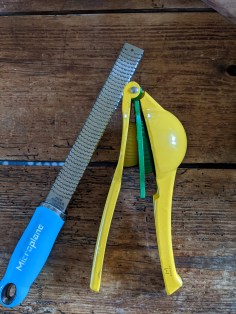
img_20200316_164109

Supplies:

Micro-plane
Juicer

Ingredients:

12 oz water
1/2 lemon, juiced
1 T freshly grated ginger
1 clove garlic
1 T honey (or more, to taste)


  1. Boil a kettle of water. I recommend really bringing your water to a boil, so your water’s steaming prolifically (I like to think of it as a personal humidifier).
  2. Meanwhile, take a micro-plane and grate about a tablespoon of fresh ginger into a mug. Do the same for a clove of garlic. If you don’t like sediment in the bottom of your mug, you can use a tea ball or filter bag.
  3. Juice half a lemon (reserve the other half for garnishing OR future tea servings) into your mug.
  4. Add a tablespoon of honey (or more, if you prefer)
  5. Pour your boiled water over everything, stir, and let sit for five minutes
  6. Enjoy!


Figuring it out, one kitchen disaster at a time

IMG_3484

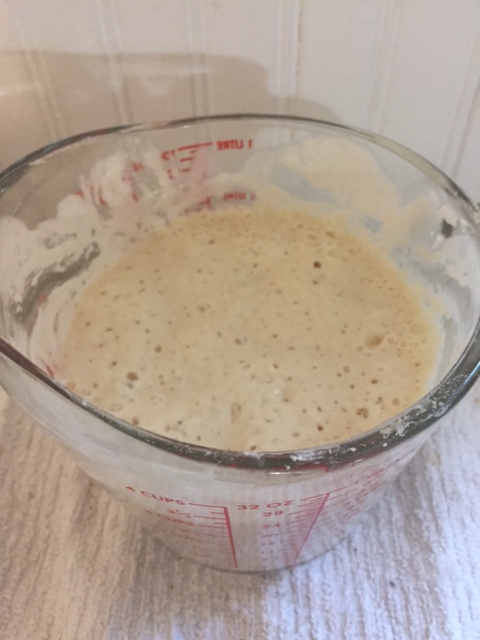
Sourdough Starter

When my parents were growing up, they took shop classes and home-ec. From spice racks to pillows, I can list dozens of basic DIY projects I don’t know how to complete, but that doesn’t mean I can’t figure it out with the help of youtube, pinterest, and a helpful book.

First on my list is learning how to become a proper baker. There’s no contest between supermarket baked goods and homemade breads and pastries. Its amazing the flavor and nutrients that are lost in mass-production.

I’ve had some success with a countertop breadmaker (holla for the challah!), but I hate being dependent on that bulky machine. I want to get my hands in the flour and make REAL FOOD – and that means sourdough, and nothing less than sourdough will do!

Fermenting flour and water is how people have been baking bread for hundreds of years. Think of all those live cultures adding flavor and texture to your food – its like kombucha for your cupboard.

Some bakers believe fermenting flour is the key to making grains more digestible, especially for people sensitive to gluten. I’m not sure about the science behind that, but I’m all for tasty, crusty bread – and doing what I can to limit gastro-intestinal distress!

So of course the first task to making tasty bread is to get some sourdough starter cooking! In this case, I’m deferring to the experts: King Arthur Flour. People use all sorts of crazy things to get their starter going (grape juice?), but their recipe is straightforward, simple, and keeps the ingredients to a minimum.

It will take a few days to get your starter going, so be patient, and plan ahead.

  • Day One: Take a cup of flour (rye or whole wheat is best, as its less processed and can feed wild yeasts best) and a half cup of cool water, mix, cover loosely, and let sit 24 hours.
  • Day Two: After 24 hours, throw away half your starter (WHHHHAAAT? NOOOOOOO! Don’t worry, we’ll work on recipes for your discarded starter) and repeat what you did yesterday: add a cup of flour (all purpose is fine in this case) and half a cup of water. You might be seeing a few bubbles and smelling a bit of tang, but don’t worry if you don’t see much action yet.
  • Day Three: You guessed it, throw away half your starter, add a cup of flour and a half cup of water, mix, cover, and set aside. By now, you should start seeing some activity. Here’s where things change: You’re going to start twice daily feedings! Every 12 hours, repeat your discard, add, mix, cover, and rest system.
  • Keep this going for another two days AT LEAST until you notice your starter doubling in volume a few hours after feedings. This could happen on day 5, or day 10 – it all depends on the climate of your kitchen.
  • Day XXXX – now you can start USING your starter instead of thowing it away. Take what you need for your recipe, but be sure to save half a cup to keep your starter going. Feed your starter, as per usual, wait an hour or so, and then put it away in your fridge. Now you just need to feed it once a week!

When I have a little money, I buy books; and if I have any left, I buy food and clothes — Erasmus

books-education-school-literature-51342.jpeg

Oh the joys of moving from an urban apartment to a country house! Forget about the attic, basement, barn, and sheds – let’s talk LIBRARY. OK, so the built-in bookshelf only holds 1/5 of our books, but there’s plenty of room for bookcases and did I mention room for a window seat?? I just need to build one!

With a new home, I’m taking a fresh look at what I used to consider “essential”. Marie Kondo says anything that doesn’t bring you joy is clutter – and lord, do I have clutter: clothes that don’t fit or have any personality, bags I NEVER use, ancient cosmetics, broken “to be fixed” trash. It’s time to get rid of the junk, and focus on quality of life.

The things that bring me joy expand my mind and feed my soul (and occasionally my stomach!). I’m cooking more (and smarter) and learning how to take care of my 100-year-old house and its backyard. In between, I’m reading everything I can get my hands on.

Read with me, cook with me, make a mess with me.